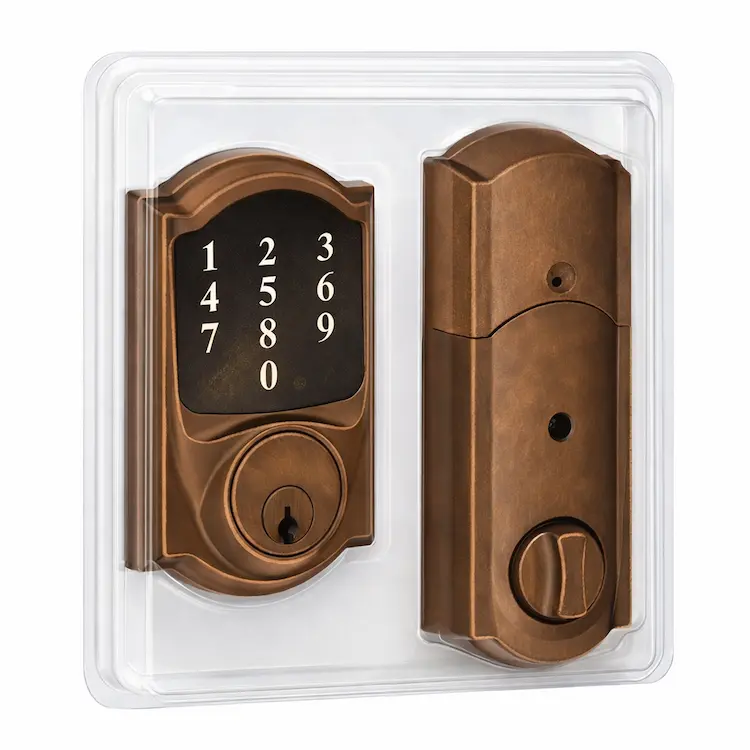
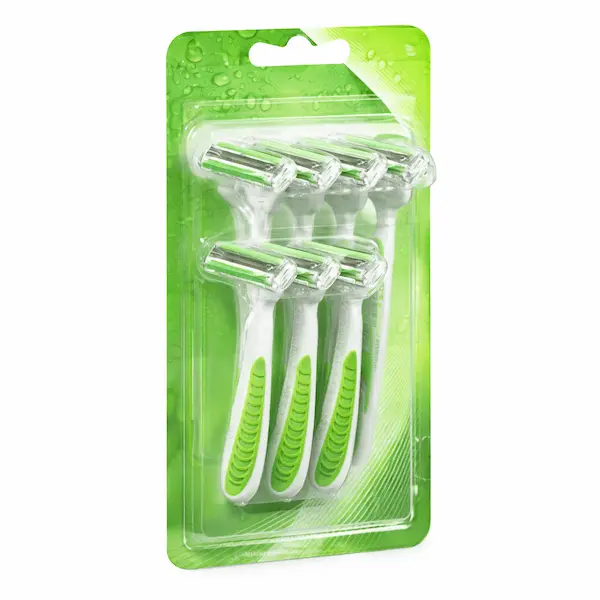
If you’ve ever opened a clear clamshell with fruit, seen a cardboard-backed blister pack for batteries, or an insert that perfectly fits a part inside a box, you already know thermoformed packaging… even if you didn’t call it that. Thermoformed packaging is a type of plastic packaging that is manufactured by heating a sheet (e.g. PET, RPET, HIPS, PP, or others) and molding it onto a mold to give it a specific shape. It is then cooled, trimmed, and ready to be used as a tray, lid, container, insert, or protection.
The power of thermoforming is that it combines two things that rarely go well together: customization and efficiency. Customization because it can be designed “tailor-made” for the product: its geometry, support points, cavities, ribs, closing tabs, ventilation areas, stacking, etc. Efficiency because, once the mold is ready, it can be produced in high volume. This makes thermoforming a very popular solution in industries such as food, retail, electronics, automotive, and medical, where presentation and protection are non-negotiable for products.
How does the process work?
Imagine a flat, thin plastic sheet. That sheet is heated until it becomes flexible. It is then placed on a mold and vacuum, pressure, or a combination is used to make the sheet copy the shape of the mold. It is then cooled to maintain its rigidity, and trimmed to leave clean edges and exact dimensions. Depending on the design, the packaging can come out as a single piece (a tray) or as a set (base + lid, blister with dome, etc.).
What are the advantages of thermoformed packaging?
1) Premium presentation and visibility.
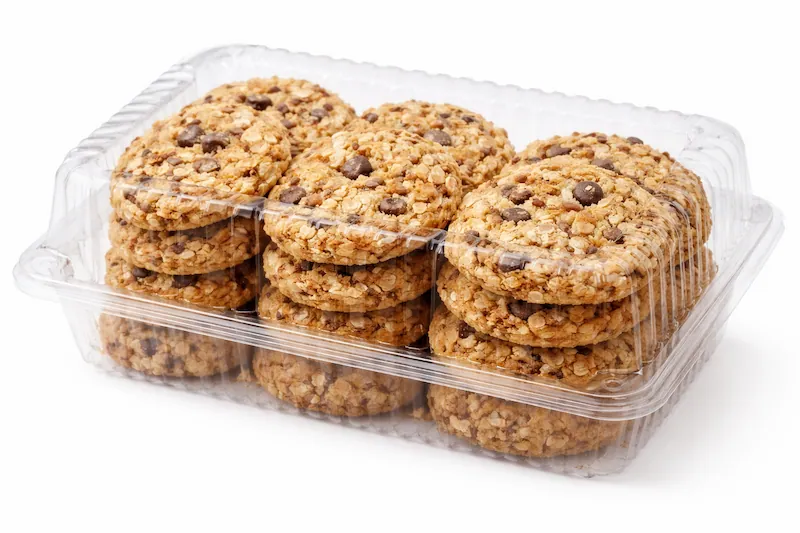
A great attraction is transparency (e.g. in PET/RPET), which allows you to see the product and improves perception on the shelf. In retail, seeing the product clearly can be the “yes” that turns a doubt into a purchase.
2) Smart protection (without wasting material).
It’s not just about “enclosing” the product: thermoforming allows you to create support points, separators, and geometries that prevent movement, bumps, scratches, and deformations. This is key in electronics, auto parts, or parts with delicate finishes.
3) Functional design and improved logistics.
Details such as stable stacking, “snap” type closures, tabs, ventilation for food, drains, labeling areas, and even designs that facilitate automation (pick & place, packaging lines, etc.) can be integrated. In addition, a good design can reduce waste, returns, and packaging time.
And… when should you use it?
Thermoforming shines when your product needs a specific shape, good presentation, or consistent protection. If you sell something that needs to look good (fresh food, confectionery, cosmetics), or something that cannot be damaged (components, spare parts, devices), thermoforming usually enters the conversation. It is also useful when you are looking for packaging that can evolve: adjust cavities, improve stacking, change thickness, modify the lid… all without having to reinvent your packaging from scratch.
An important point: thermoforming “is not” synonymous with disposable
Today, many thermoformed solutions can be designed with material optimization in mind (using the minimum necessary), recyclability (e.g. PET/RPET), and efficient use in the logistics chain. It’s not magic, but it is a field where industrial design and packaging engineering make a huge difference.
In the end, thermoformed packaging is that: engineering turned into shape. Packaging that may look simple, but inside is full of decisions: how the product is protected, how it looks on the shelf, how it is transported, how it is opened, how it is stacked, and how it is produced. Therefore, when it is well done, it not only “packages”: it sells, protects, and facilitates the operation.
If you have a product that requires thermoformed packaging, do not hesitate to contact us.